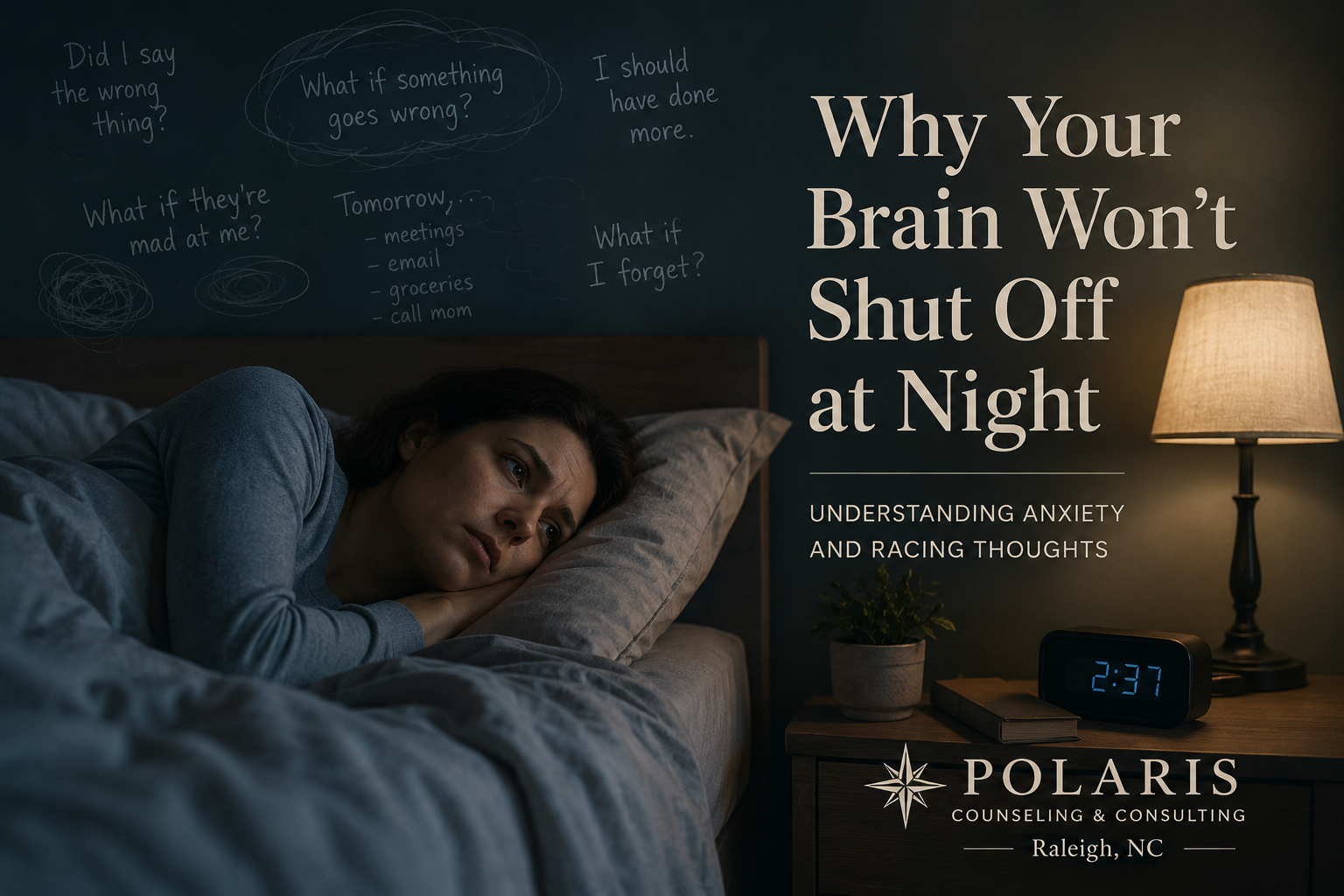
ANXIETY: Why Your Brain Won’t Shut Off at Night: Understanding Anxiety and Racing Thoughts
You finally get into bed after a long day. The house is quiet. Your body is exhausted.But your mind?Wide awake.Suddenly you’re replaying conversations, worrying about tomorrow, thinking about everything you forgot to do, questioning decisions, imagining worst-case scenarios, or reliving moments you wish had gone differently.If this sounds familiar, you’re not alone.For many people struggling with anxiety, nighttime becomes the loudest part of the day.
Why Anxiety Gets Worse at Night
During the day, your brain has distractions:
- work
- kids
- conversations
- errands
- notifications
- responsibilities
But when everything slows down, your nervous system finally has space to catch up.An anxious brain often mistakes stillness for vulnerability.Without distractions, unresolved stress, fear, pressure, and emotional overload rise to the surface.This is why many people experience:
- racing thoughts
- chest tightness
- difficulty falling asleep
- waking up in panic
- overthinking
- replaying conversations
- catastrophic thinking
- inability to “turn off” their brain
Anxiety Is Not Just “Overthinking”
Many people criticize themselves for being “dramatic” or “too sensitive.”But anxiety is not simply a mindset problem.It’s a nervous system response.When your body perceives stress or danger for long periods of time, it can remain stuck in survival mode — even when you logically know you are safe.This can happen after:
- chronic stress
- burnout
- trauma
- difficult relationships
- divorce
- grief
- childhood emotional wounds
- high-pressure environments
- prolonged uncertainty
Your brain learns to stay alert.At night, that alertness often shows up as mental noise.
The Body Often Holds Anxiety First
Many people don’t even recognize they’re anxious because they experience it physically before emotionally.Common physical symptoms of anxiety include:
- muscle tension
- headaches
- stomach problems
- jaw clenching
- racing heart
- shallow breathing
- dizziness
- fatigue
- insomnia
- feeling “wired but tired”
Sometimes people say:
“I’m exhausted, but I can’t relax.”
That’s often a nervous system issue — not laziness or weakness.
Why Logical Thinking Doesn’t Always Stop Anxiety
One of the most frustrating parts of anxiety is that insight alone often doesn’t fix it.You may know:
- things will probably be okay
- you’re overthinking
- your fears are irrational
…but your body still reacts as if danger is present.That’s because anxiety is not only cognitive — it’s physiological.This is why effective therapy often includes both:
- thought work
- nervous system regulation
What Actually Helps Anxiety at Night?
Healing anxiety usually involves learning how to help the nervous system feel safe again.That may include:
- identifying chronic stress patterns
- processing unresolved trauma
- improving boundaries
- reducing emotional overload
- learning grounding techniques
- improving sleep habits
- reducing perfectionism and hypervigilance
- practicing body-based calming strategies
Approaches like EMDR therapy, somatic therapy, mindfulness, and trauma-informed counseling can be especially helpful for people whose anxiety feels deeply rooted or physically overwhelming.
You Don’t Have to Stay Stuck in Survival Mode
Many people assume anxiety is simply part of their personality:
“I’ve always been this way.”
But anxiety is often a learned survival response — and survival responses can heal.Therapy can help you:
- understand the root of your anxiety
- calm your nervous system
- improve emotional regulation
- reduce panic and overthinking
- feel more present and connected
- finally experience rest without constant mental noise
Anxiety Therapy in Raleigh, NC
At Polaris Counseling & Consulting, we provide trauma-informed therapy for anxiety, stress, trauma, and nervous system overwhelm. We work with adults, teens, couples, and families using evidence-based and compassionate approaches tailored to each individual’s needs.If anxiety is keeping you stuck in overthinking, emotional exhaustion, or chronic stress, you do not have to navigate it alone.Contact Polaris Counseling & Consulting to learn more about anxiety therapy and EMDR services in Raleigh, NC.